Our research is driven to understand how the Earth is changing. The Earth has undergone physical and environmental change throughout its history. Animals and plants need to adapt to these changing environments to ensure their survival. Without understanding environmental change of the past and present it will be more difficult to make informed decisions that will ultimately affect the survival of plants, animals and humans. The research that we do are in collaboration with students, assistant researchers and collaborating researchers.
Modern ecosystem recovery in South Africa
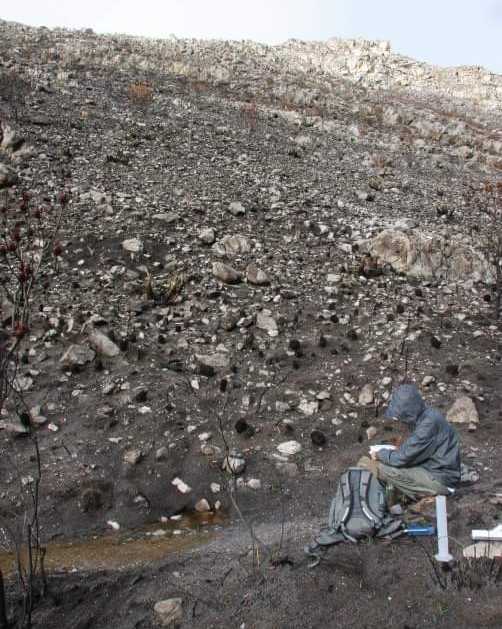
Modern ecosystems are constantly undergoing change through natural and human-induced causes. Research by Dr Eugene Bergh traced the depletion of vital ions to an ecosystem in the southwestern Cape region in South Africa and its recovery after a major fire event through geochemical analyses of bedrock, soil, stream water, rain water and atmospheric dust inputs into the area. Analytical methods in this research included ICP-MS, GIS, XRD and XRF. His research found important contributions from marine aerosols as well as continental-derived dust inputs from the interior of the country.
Tracing modern ecosystem and environmental change
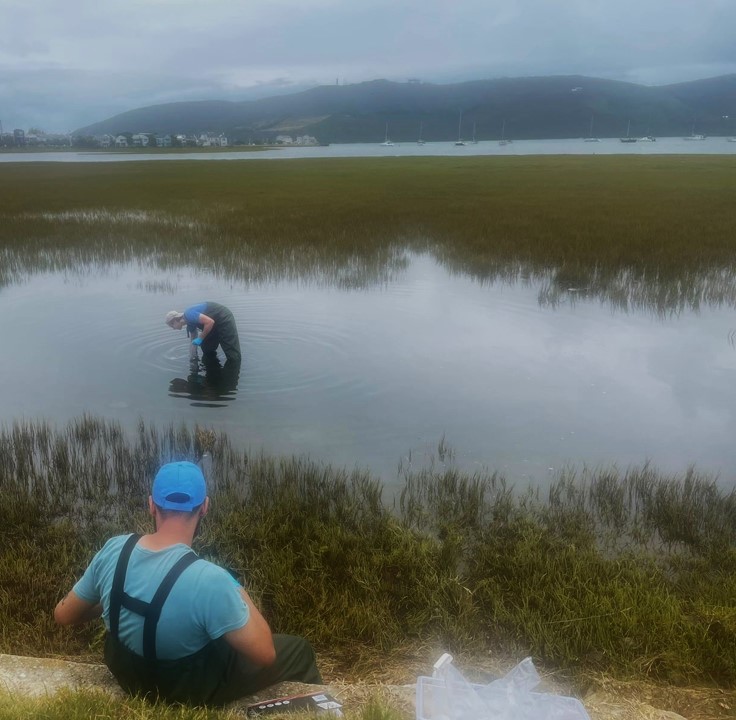
The physical environment and chemical characteristics of aquatic water bodies are undergoing significant changes as a result of climate change and human activities such as industrialisation and urbanisation. Research from Dr Bergh will aim to understand the changes occurring in marginal marine environments along the South African coast and its potential causes through analyses of the physical environment and the geochemical analyses of sediments and microfauna in these environments.
Depositional environments through time
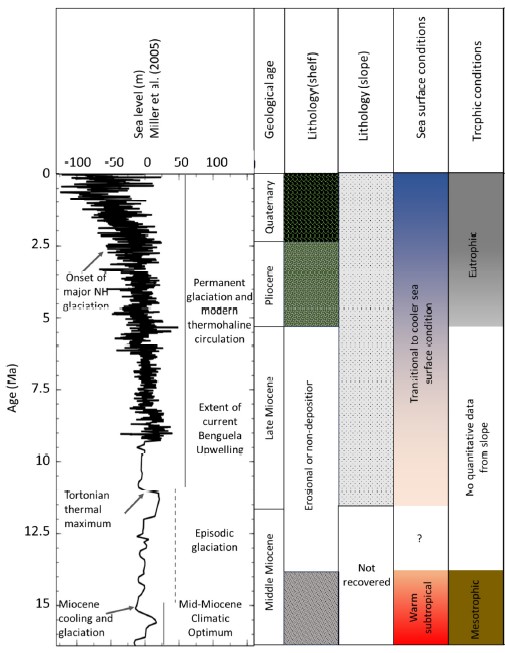
Environments on Earth have changed continuously through the entire span of geologic history. The past understanding of environments can assist us in determining modern changes that are occurring. This type of research can even inform us on policy changes and how we will need to adapt to changing environments. Research in this field also inform us on sea level changes and by how much sea levels can rise with increasing carbon dioxide levels in the atmosphere. This is achieved through analysing rock sequences, sediments and fossils. Research by Dr Bergh, his students and assistant researchers have conducted and are still conducting this type of research along the western and southern margins of southern Africa in time intervals ranging from 16 million years ago to present.
Oceanographic change research
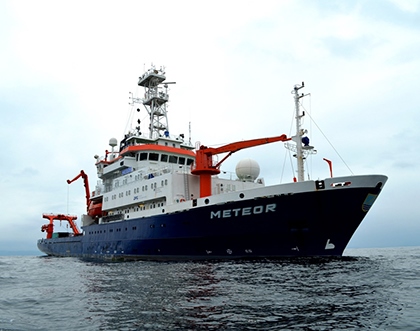
The oceans have changed over hundreds of millions of years and are still changing today. The atmosphere and oceans are crucially interlinked, affecting global and regional weather and climate systems. The oceans also provide food security to much of the world and are home to complex ecologies. For these reasons it is important to understand how the oceans have changed, and are still changing today. Research by Dr Eugene Bergh and collaborators aims to understand how past and modern climate change are influencing the productivity, temperature, depositional environments, marine ecosystems and ocean currents along the southern African margin through isotopic (87Sr/86Sr, d13C, d18O, eNd) and geochemical elemental analyses.
Palaeontological research
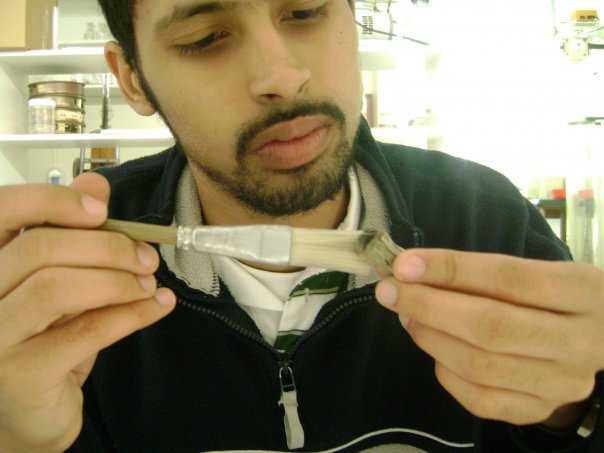
Studying fossils is an important tool in understanding past environments. The remains of animals, organisms and plants that lived long ago can provide a window into understanding how the Earth has changed. Dr Eugene Bergh carries out research on marine fossils in an attempt to understand how past ecosystems have changed with changing climate, environmental and oceanographic changes. He couples faunal analyses with geochemical methods to determine he environmental setting at particular time intervals.

Comparative environments research
The Earth has undergone environmental and climate change for its entire history, but humans have had a marked affect in changing landscapes and environments. In areas close to or at urban expansion, aquatic environments are being polluted and ecologies are changing. The research by Dr Eugene Bergh and collaborators are studying estuarine and marginal marine environments from different parts of the world to understand how anthropogenic activities are changing these environments. The researchers will use their expertise to determine how the physical landscape has changed, how the sedimentology of the regions have been affected and how the chemistry of water bodies has been influenced as a result of human influence.
Collaborator Institutions and Funder Credits




 Dr Eugene Bergh